
Department 56 has created dozens of charming village series over the years, but the core village series stand apart as the heart of the brand: The Original Snow Village and the 5 village series that fall under the Heritage Village Collection umbrella. Collectors often wonder—what exactly makes them different?
In this guide, we’ll break down the key differences between these Department 56 core villages. But before we can begin, let’s introduce the core villages.
What are the Department 56 Core Villages?
The core villages are the Original Snow Village and the 5 Villages that fall under the Heritage Village umbrella: Dickens Village, North Pole, Alpine Village, New England, and Christmas in the City. These two collections capture the most popular village series and are what make Department 56 synonymous with Christmas Tradition.
Spotlight on The Original Snow Village
The Original Snow Village is the flagship product of Department 56 and was conceived after a group of friends took a holiday trip to the Lowell Inn in Stillwater, Minnesota. The quaint village, decked out in festive Christmas decor and topped with a fresh coat of glistening snow, inspired the idea of a lighted Christmas Village. in 1976, the first 6 buildings were introduced and the Christmas Village tradition was born.
Small Town, USA is the inspiration for The Original Snow Village. The buildings reflect the charm of Main Street and the surrounding neighborhoods. It is Department 56’s largest village series and was the first to introduce special license buildings such as Mcdonald’s, Starbucks, and Coca-Cola to name just a few. Although The Original Snow Village is one series, there are a number of subseries. These subseries include American Architecture Series, Buck’s Country Series, Christmas Lane Series, Chow Town, and National Lampoon’s Christmas Vacation.
SERIES CHARACTERISTICS
The Original Snow Village buildings are made of ceramic, have a glossy glazed finish, and have a larger footprint. Village buildings aren’t always made to the same scale, but in general, the village buildings are closest to the O SCALE (1:48). In my calculations, they ranged from 1:40 to 1:60.What is the Department 56 Heritage Village Collection?
Spotlight on the 5 Series of the Heritage Village Collection
The Heritage Village Collection is not a single village series, but rather a collection of 5 different series all under the Heritage Village Collection umbrella. The series includes Dickens Village, New England Village, Alpine Village, Christmas in the City, and North Pole. Listed below is a quick introduction to each series.
Dickens’ Village Series
The first series of the Heritage Village Collection was introduced in 1984. The series was inspired by Victorian England and many cherished novels written by Charles Dickens. The Christmas Carol, of course, but also Oliver Twist, Nicholas Nickleby, David Copperfield, and many others.
Estimated Scale 1:52 (Closest to O Scale)
NOTE: While most of the buildings in this series are in line with the size of the Heritage Village Collection village series, some buildings are larger in size than the other village collections.
New England Series
The second series was introduced in 1986 under Heritage Village Collection. The series is inspired by the rolling rural farmlands to the lighthouse-speckled coastline of New England. The focus is on harvest time and the beautiful changing of the season as we head into Christmas time.
Estimated Scale 1:62 (Closest to S Scale)
Alpine Village Series
The third series added to the Heritage Village Collection. Introduced in 1986, it’s inspired by the mountain villages of the Alps and Germany’s Black Forest. From castles to Christmas markets, chalets to ski resorts this village series captures the charm of a mountainside Alpine Village.
Christmas in the City
The fourth installment in the Heritage Village Collection. Introduced in 1987, this village was inspired by the hustle and bustle of Big City, USA. Think New York City in the winter. These buildings have a smaller footprint and are designed to be placed close side by side.
North Pole
This village series made its magical debut in 1990. A colorful, fun, and whimsical village where Santa and his Elves live all year. The series includes the home of Mr. and Mrs. Claus, downtown North Pole with all the stores the elves need for year-round fun, and special buildings for the Reindeer.
Estimated Scale 1:62 (Closest to S Scale)
SERIES CHARACTERISTICS
The Heritage Village Collection buildings are made of porcelain, have a matte finish, and have a smaller footprint. Village buildings aren’t always made to the same scale, but in general, the Heritage village buildings are closest to the S SCALE (1:64). In my calculations, they ranged from 1:52 to 1:62
Difference Between Department 56 Villages
Ok, now that we have a good introduction to each of these core villages, let’s dive into the comparison of these villages. Let’s start by looking at the Department 56 Christmas Village Family Tree.
Department 56 Christmas Village Family Tree
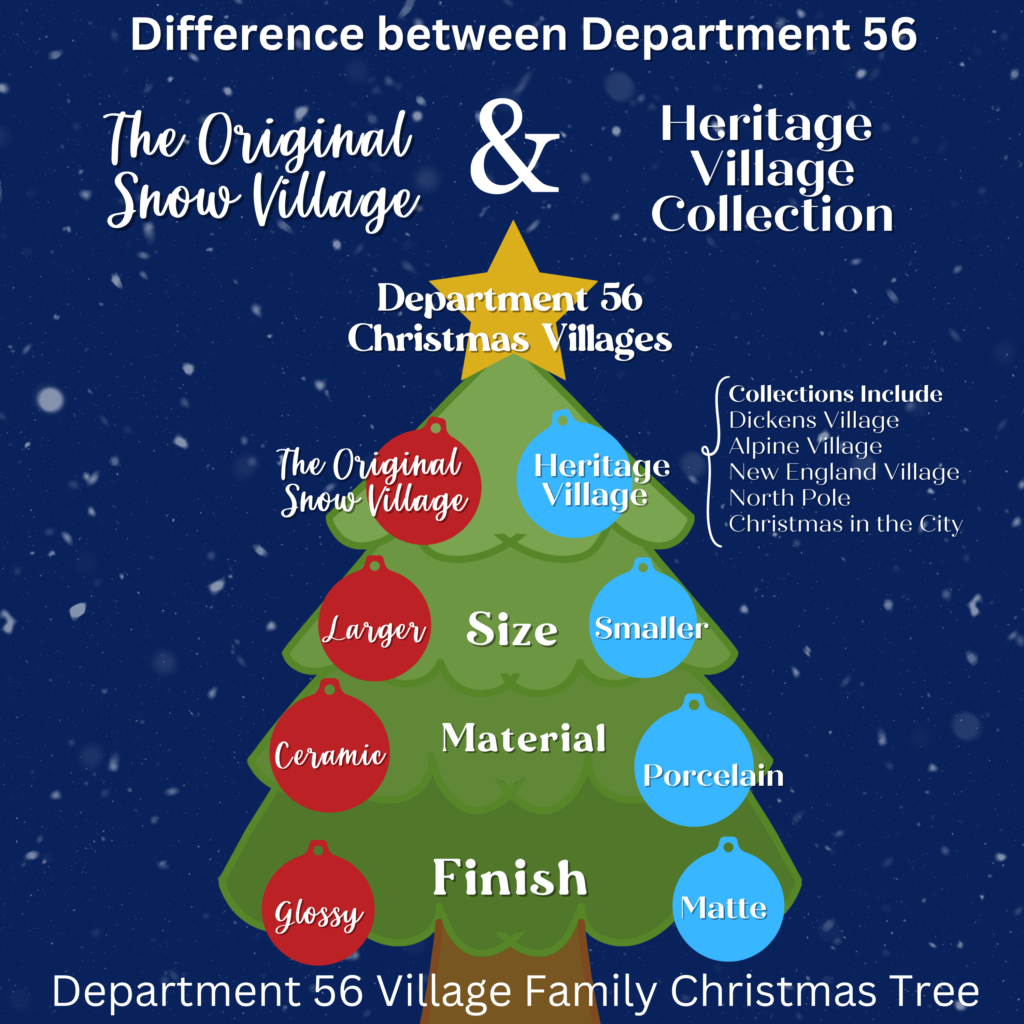
Department 56 Village Differences: A Visual Comparison
While both collections capture the magic of Christmas, they have a few very noticeable differences:
- The Original Snow Village pieces are larger ceramic buildings with a glossy glazed finish.
- The Heritage Village Collection pieces are generally smaller porcelain buildings with a matte finish.
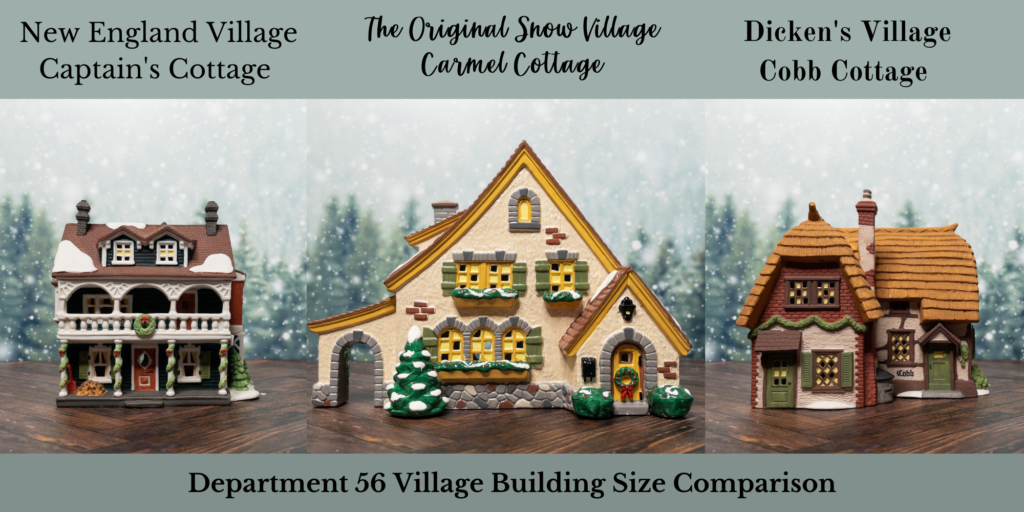

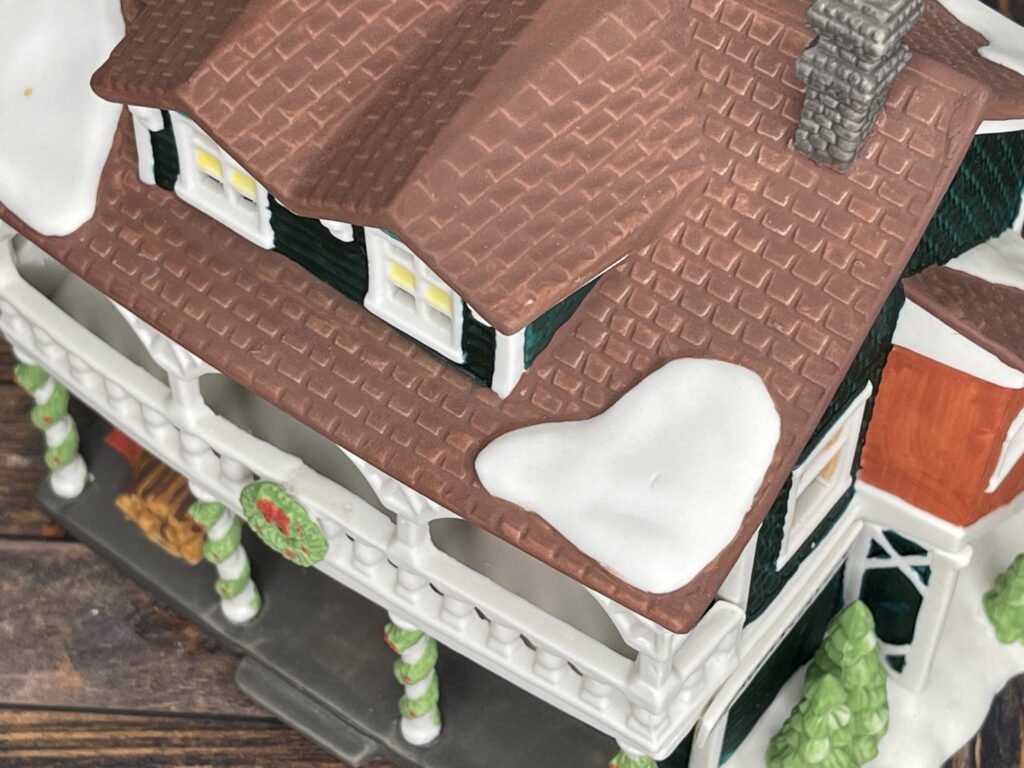
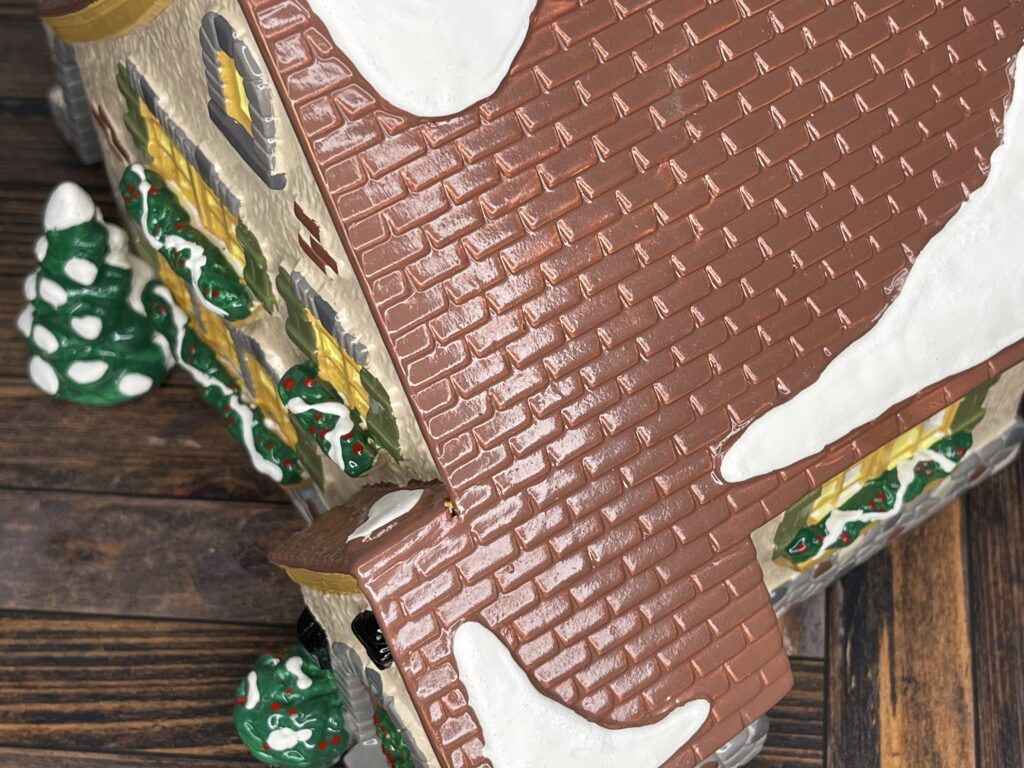
These distinctions in scale, material, and style are what make each collection unique — and they also explain why some collectors prefer one over the other (or why many choose to collect both!).
Differences in Department 56 Village Accessories
It’s not just the buildings that set these two collections apart — the accessories and figures also follow their own unique styles and scales.
- The Original Snow Village accessories are larger (about 1:23 scale), made of ceramic, and often have a glossy finish. They match the bigger, Americana-style buildings and create a bold presence in displays.
- The Heritage Village Collection accessories are smaller (about 1:29 scale), crafted from porcelain, and usually have a matte finish. They’re designed to complement the finer, more detailed look of Dickens, Alpine, Christmas in the City, and other Heritage series.
Because of these scale and finish differences, mixing accessories from one collection into the other can look a little mismatched.
Understanding Scale Differences Between Department 56 Buildings and Figures
Department 56 buildings and accessories are not made to the exact same scale. Most buildings fall within the 1:49–1:72 range depending on the series, while the figures are typically produced at 1:23 (Snow Village) or 1:29 (Heritage Village). This difference is intentional, since making the figures smaller would cause fine details to be lost during production.
“Since the pieces are made of porcelain or ceramic, they shrink when they are fired, usually about 5% to 15%. If we made the accessories any smaller, the tiny details would be lost, such as the petals on a flower or the folds in a woman’s shawl.”
Department 56 FAQ
What About All The Other Department 56 Villages?
In this post, we compared the key differences between The Original Snow Village, Dickens Village, Alpine Village, New England, North Pole, and Christmas in the City. But these are only part of the story. Want to see a list of other series? Check out my complete list of Department 56 Villages post.




Is it true that there is a Mr. Orly figurine for the North Pole Series? I have been searching a long time for one.
Hello! I checked the information I have, and I looked on the Department 56 History Lists, but I don’t see any record of a Mr. Orly Figure in the North Pole series. 😔